

Sustainability reporting software: how to choose a system aligned with CSRD, ESRS and ESG standards

Gabriela Gic-Grusza
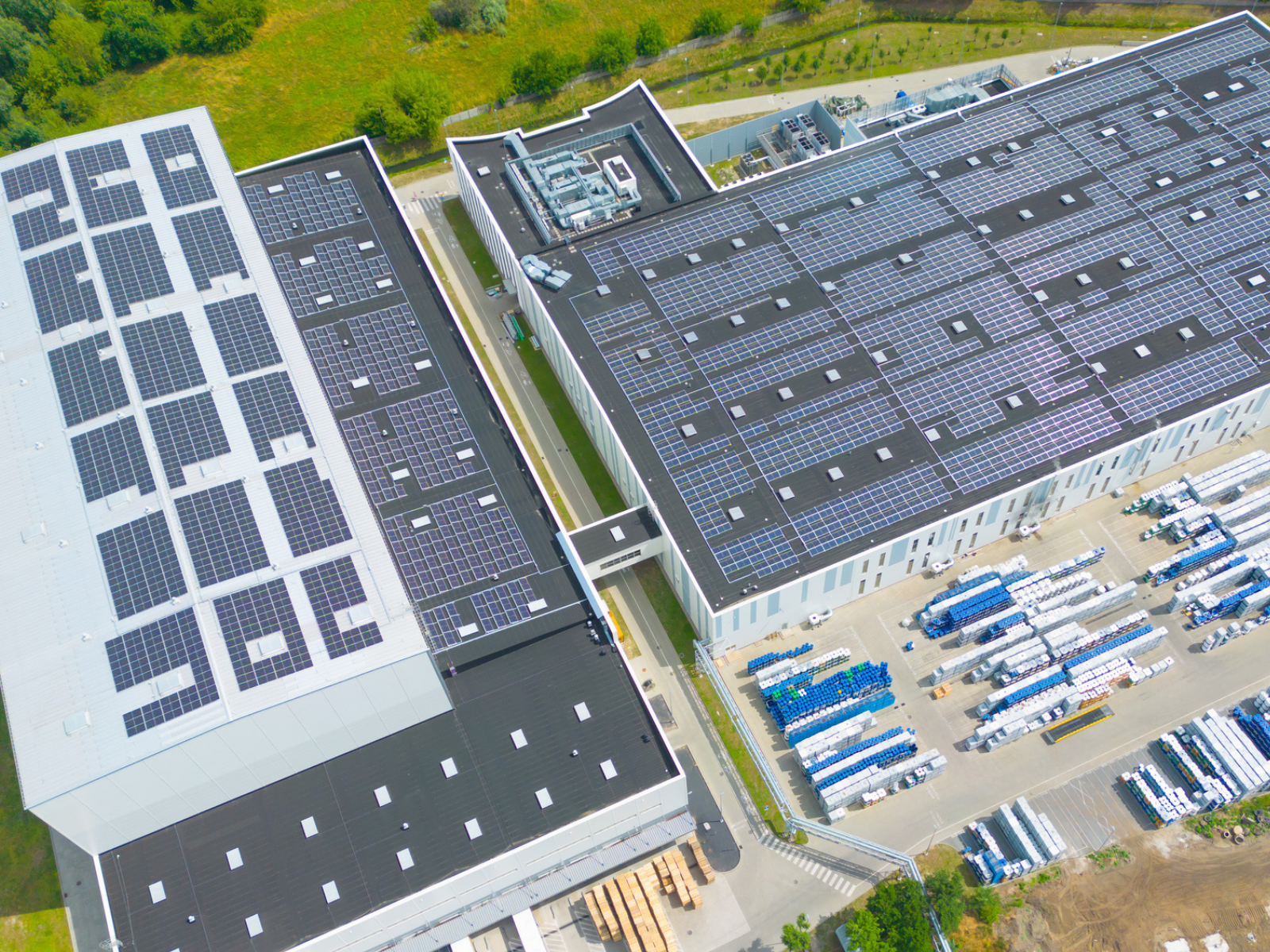
Sustainability reporting software automates the collection, validation, analysis and disclosure of ESG data in line with regulatory requirements and standards such as CSRD, ESRS, GRI, SASB, TCFD, ISSB and CDP. In industrial companies, its value lies above all in bringing operational, energy, environmental, financial and organisational data together into a single audit-ready report.
This is no longer simply a tool for producing a polished annual report. Regulatory requirements, growing data volumes, the need for a defensible audit trail and the obligation to report Scope 1, Scope 2 and Scope 3 emissions mean that spreadsheets stop being sufficient in medium-sized and large organisations.
What is sustainability reporting software?
Sustainability reporting software is a platform that supports the entire ESG reporting process: from acquiring source data, through validating it and mapping it to reporting standards, to producing reports for regulators, the board, investors, auditors and other stakeholders.
A system of this kind should handle data across all three ESG pillars:
| Pillar | Data scope | Examples |
| Environmental (E) | Environmental impact data | Emissions, energy, water, waste, wastewater, raw materials, fuels, transport |
| Social (S) | Workforce and social impact data | Health and safety, employment, diversity, training, turnover, human rights |
| Governance (G) | Management and compliance data | Ethics, regulatory compliance, risks, policies, controls, governance structure |
The core capabilities of such a system include:
- automated data collection;
- integration with ERP, HR, EHS, SCADA, IoT, MES, finance and supply chain systems;
- support for Scope 1, Scope 2 and Scope 3 emissions;
- ESG indicator management;
- mapping of data to multiple reporting standards;
- gap analysis against regulatory requirements;
- a complete audit trail;
- version control for reports;
- user and permission management;
- dashboards and analytics;
- report generation;
- preparation of data for audit and assurance;
- XBRL or iXBRL tagging where required.
In practice, the system must answer three questions: where the data came from, whether it is complete, and whether you can prove how it found its way into the report.
ESG software vs. sustainability reporting software: are they the same thing?
ESG reporting software and sustainability reporting software are often used interchangeably, but they do not always mean exactly the same thing. The broader term ESG software also covers tools that are not primarily about reporting.ESG software and sustainability reporting software are often used interchangeably, but they do not always mean exactly the same thing.
ESG software tends to be the broader category. It may cover ESG data management, decarbonisation targets, supplier assessment, ESG risk, ratings, regulatory monitoring, carbon footprint calculation and reporting. Sustainability reporting software focuses primarily on the reporting process itself: the data, the standards, compliance, the audit trail and the preparation of disclosures.
| Term | Scope | Primary use case |
| ESG software | Broader management of ESG data, risks and initiatives | Running an ESG programme: risk, suppliers, emissions and targets |
| Sustainability reporting software | The sustainability reporting process | Producing reports aligned with CSRD, ESRS, GRI, ISSB, CDP or other frameworks |
| Environmental reporting software | Environmental reporting | Emissions, energy, water, waste, permits and environmental data |
| Carbon accounting software | Greenhouse gas accounting | Scope 1, Scope 2, Scope 3, emission factors, carbon footprint |
For an industrial organisation, what matters is not the category label but the actual functional scope. The system should support the standards, data sources and audit processes that the organisation genuinely needs.
Why do companies need a dedicated ESG reporting system?
Companies need a dedicated ESG reporting system because sustainability reporting is becoming a regulated, auditable process that increasingly resembles financial reporting.
The main drivers for implementation are:
- growing regulatory requirements;
- the need to report against several standards at once;
- the need to handle Scope 1, Scope 2 and Scope 3 data;
- the double materiality requirement under CSRD;
- the obligation to maintain an audit trail;
- the need for version control and formal approvals;
- pressure to reduce manual work in Excel;
- expectations from investors, customers and financial institutions;
- auditor requirements;
- the need to consolidate data across multiple entities, sites and countries.
A spreadsheet may be adequate at a very early stage, when an organisation reports a small number of indicators and is not subject to complex regulatory obligations. The problems begin when data has to be gathered from many locations, its origin documented, owners assigned, change history retained, figures mapped to several standards and the result made audit-ready.
The main regulatory drivers: CSRD, SEC, ISSB and the EU Taxonomy
Regulation is the principal driver behind these implementations. CSRD, ESRS, ISSB, the SEC climate disclosure rules and the EU Taxonomy all require ESG data to be managed systematically, repeatably and verifiably.
CSRD and ESRS
The Corporate Sustainability Reporting Directive (CSRD) introduces mandatory sustainability reporting for large companies in the European Union and for some non-EU groups operating on the European market. Its original, much broader scope was narrowed by the Omnibus I directive (Directive (EU) 2026/470, adopted on 24 February 2026 and in force from 18 March 2026).
CSRD is implemented through the European Sustainability Reporting Standards (ESRS). In practice, this means reporting according to a defined structure covering environmental, social and governance topics. On 3 July 2026 the European Commission adopted the delegated act containing the revised, simplified ESRS, which reduce the number of mandatory data points by around 61% (from roughly 1,073 to roughly 320). The act is in the European Parliament and Council scrutiny period and will apply to financial years beginning on or after 1 January 2027, with optional early application for financial year 2026.
The position after Omnibus I entered into force: the reporting obligation applies primarily to companies with more than 1,000 employees and more than EUR 450 million in net revenue, as well as to non-EU groups generating more than EUR 450 million of revenue in the Union that also have an EU subsidiary or branch with more than EUR 200 million of turnover. The new thresholds apply to financial years beginning on or after 1 January 2027 (first reports in 2028 for financial year 2027), the phased “wave” system has been abolished altogether and listed SMEs have been removed from mandatory scope, sector-specific ESRS have been dropped, and Member States may exempt first-wave companies that fall out of the revised scope from reporting for 2025 and 2026.
This has a concrete consequence for system selection: many organisations now report not because the law requires it, but because customers, banks and investors do. Functional scope should therefore be matched to the real requirements of the data recipients rather than to the maximalist 2023 version of CSRD.
The CSRD and ESRS requirements that matter most for the system are:
- double materiality;
- reporting both the organisation’s impact on its environment and the effect of ESG factors on financial performance;
- thematic environmental, social and governance standards;
- an audit trail;
- assurance readiness;
- digital tagging of reports;
- preparation of data in a machine-readable format.
For a reporting system, this means handling a large number of data points, data owners, approval workflows and data gaps, as well as the relationships between risks, policies, targets and indicators.
SEC climate disclosure
The SEC Climate Disclosure Rule was adopted in March 2024 and was intended to require US public companies to disclose information on climate, risk, governance, strategy and the financial impact of climate-related risks. It never took effect: the SEC stayed the rule in April 2024, withdrew its defence of the rule in court in March 2025, and on 29 May 2026 proposed to rescind it entirely (the proposal was published in the Federal Register on 3 June 2026, with comments due by 3 August 2026). The earlier SEC guidance from 2010 on disclosing material climate-related risks remains in force.
For a reporting system, this still translates into a need to handle emissions data, manage climate risk, document assumptions and connect ESG data with financial data. In practice, however, climate reporting in the United States is now driven not by federal rules but by state-level regulation (principally California’s SB 253 and SB 261, whose deadlines are still being adjusted and parts of which remain enjoined), together with investor expectations and corporate customer requirements. The direction of travel is therefore the same as in the EU: climate data must be better controlled, more consistent and auditable, whatever the source of the requirement.
ISSB and IFRS S1–S2
The International Sustainability Standards Board (ISSB) developed IFRS S1 and IFRS S2 as a global baseline for sustainability-related disclosures.
IFRS S1 covers general sustainability-related disclosures, while IFRS S2 focuses on climate. Both standards are investor-oriented and built around financial materiality, consolidating approaches previously known from TCFD and SASB.
The reporting system should allow data to be mapped to ISSB requirements, particularly where the organisation reports globally or operates in jurisdictions adopting the IFRS Sustainability standards.
The EU Taxonomy
The EU Taxonomy classifies economic activities according to their alignment with environmental objectives. It requires ESG data to be linked to economic activities, revenue, capital expenditure and operating expenditure.
For the system, this means combining environmental data with financial and business data. Knowing emissions or energy consumption is not enough; you also need to know how a given asset, process or activity fits into the regulatory classification.
The Polish context: the Accounting Act and the implementation of Omnibus I
CSRD was transposed into Polish law by the Act of 6 December 2024 amending the Accounting Act, the Act on Statutory Auditors, Audit Firms and Public Oversight, and certain other acts (Journal of Laws 2024, item 1863). The act introduced an obligation to prepare sustainability reporting and to have it assured by a statutory auditor.
Further changes followed from the EU simplification agenda. The “stop-the-clock” directive (Directive (EU) 2025/794, which deferred the first reports of the second and third waves by two years) was implemented by the Act of 9 July 2025 (Journal of Laws 2025, item 1020), in force from 12 August 2025. The Omnibus I package has so far been implemented only partially in Poland, through the Act of 27 February 2026 amending the Accounting Act (Journal of Laws 2026, item 333), in force from 14 March 2026. This first stage principally introduces the option to exempt first-wave companies from reporting for 2025 and 2026 where the higher thresholds place them outside the target scope of CSRD.
The second stage of transposition is still under way. The draft act implementing the remaining Omnibus I simplifications (UC155) was entered in the government’s list of legislative work on 17 June 2026 and referred to public consultation; it is intended to enter into force on 1 January 2027 and also revises the assurance rules. The deadline for transposing the sustainability reporting provisions of Directive 2026/470 falls on 19 March 2027. The final shape of national thresholds and obligations should therefore be verified on an ongoing basis, including during a software procurement process.
What this means for system selection in Poland:
- the exemption for 2025–2026 is an option, not an automatic release from the obligation – taking it does not remove pressure from banks, insurers and supply chain customers who require the same data;
- assurance is provided by a statutory auditor working under national audit firm legislation, so the system must make methodology, assumptions and the audit trail available in a form the auditor will accept;
- sustainability reporting is a distinct part of the management report, not a separate communications document – the data must be consistent with the financial statements and with the year-end close calendar;
- in groups operating in several EU countries, it is worth checking whether the system can accommodate different national transposition timelines and different reporting scopes across subsidiaries.
Comparing reporting standards and frameworks
A sustainability reporting system should support multiple standards and allow the same data set to be mapped to several reporting frameworks.
| Standard / framework | Scope | Materiality type | Mandatory? | Geographic reach | Key data | Implications for the system |
| GRI | Broad impact reporting | Impact materiality | Voluntary but widely adopted | Global | Environmental, social and governance impact | Support for many topics, indicators and narrative disclosure |
| SASB | Industry standards for 77 industries | Financial materiality | Voluntary, used in investor reporting | Global, strongly investor-focused | Industry-specific ESG metrics | Mapping data to industry specifics |
| TCFD | Climate-related risks and opportunities | Financial materiality | Being absorbed into other standards | Global | Governance, strategy, risk, metrics and targets | A structure for climate and risk disclosures |
| CDP | Environmental questionnaires | Investor and environmental | Voluntary, often required by customers and investors | Global | Climate, water, forests; scoring from A to D- (F for non-disclosure) | Managing questionnaires, responses and scoring history |
| CSRD / ESRS | Mandatory EU reporting | Double materiality | Mandatory for companies in scope (after Omnibus I: >1,000 employees and >EUR 450m revenue) | EU and selected non-EU companies | E, S and G data, policies, targets, actions, risks | Extensive workflows, audit trail, gap analysis, digital tagging |
| ISSB / IFRS S1–S2 | Global baseline for investor reporting | Financial materiality | Depends on jurisdiction | Global | General sustainability topics and climate | Mapping to financial data, risks and investor metrics |
The most important requirement is not simply “support for standard X”, but the ability to map one data set to many standards. Energy, emissions and fuel data, for example, may be needed simultaneously for CSRD, GRI, CDP, ISSB and internal reporting.
How reporting standards translate into system requirements
Reporting standards and frameworks determine what data has to be collected, how it must be described, who should approve it and in what format it should reach the report.
In practice, this means the system needs not only reporting features but also process and control features:
- requirement libraries for different standards;
- mapping of indicators to standards;
- data gap analysis;
- assignment of indicator owners;
- an approval workflow;
- an audit trail;
- version control;
- report export options;
- multi-language support;
- audit readiness;
- digital tagging capability.
For industrial companies there is an additional requirement: connecting ESG reporting to operational data such as energy and fuel consumption, utilities, production volumes, quality indicators, asset performance and site-level environmental data.
Key features of sustainability reporting software
Good sustainability reporting software should combine data automation, alignment with reporting standards, a complete audit trail, analytics and report generation.
| Feature | Description | Why it matters | Related standards |
| Data collection and integration | Automated data feeds from ERP, SCADA, IoT, HR, EHS, finance, supply chain and invoices | Reduces manual work and errors | CSRD, GRI, CDP, ISSB, EU Taxonomy |
| Mapping to standards | Assignment of data to GRI, ESRS, SASB, TCFD, ISSB and CDP requirements | Allows one data set to be reported under several standards | All major standards |
| Gap analysis | Identifies data missing against a selected standard | Simplifies preparation for reporting and audit | CSRD/ESRS, ISSB, CDP |
| Audit trail | Shows data sources, changes, approvals and transformations | Supports assurance and internal control | CSRD, assurance, ISAE 3000 |
| Version control | Manages report versions and restatements | Reduces the risk of working on incorrect data | Regulatory reporting |
| ESG dashboards | Present KPIs, trends and variances | Enable management, not just reporting | ESG management, CDP, GRI |
| Scope 1/2/3 emissions management | Handles emissions data and emission factors | Emissions are one of the core reporting areas | GHG Protocol, CSRD, ISSB, CDP |
| Report generation | Produces reports in the required layouts and formats | Shortens report preparation time | CSRD, GRI, ISSB, CDP |
| XBRL / iXBRL | Digital tagging of reported data | Required for machine-readable reporting | CSRD/ESRS |
| Permission management | Roles, access rights and approvals | Protects data and clarifies accountability | Audit, assurance, governance |
The system should support both external reporting and internal management. Otherwise the organisation will produce a report but will not build a process that allows data, targets and actions to be improved continuously.
Scope 1, Scope 2 and Scope 3: what the system has to handle
Scope 1, Scope 2 and Scope 3 emissions data is one of the most important data sets in environmental reporting. The system must be able to collect, calculate, validate and document it.
| Scope | Data sources | Collection method | System requirement | Biggest challenge |
| Scope 1 | Owned emission sources: boilers, furnaces, fleet, processes, fuels | Meters, fuel invoices, IoT systems, site data | Automation of meter, fuel and process data | Data completeness across multiple sites |
| Scope 2 | Purchased electricity, heat, steam and cooling | Invoices, energy supplier data, EMS systems, meters | Support for location-based and market-based methods | Correct allocation of energy to sites and organisational units |
| Scope 3 | Value chain: suppliers, transport, products, travel, waste | Supplier surveys, procurement data, spend-based models, logistics data | Management of supplier data and the 15 GHG Protocol categories | Availability and quality of external data |
Scope 1 and Scope 2 can be partly automated through integration with meters, energy systems, SCADA, IoT, invoices and finance systems. Scope 3 is harder, because it requires supplier data, procurement data, spend categories, emission factors and a large number of calculation assumptions.
The system should manage emission factor databases such as DEFRA, EPA, ecoinvent or other recognised sources, and record which factor was used, when and for which data type. It is also worth asking the vendor how they plan to handle changes in the standards themselves: in March 2026 the GHG Protocol published a draft revision of the Scope 3 Standard, which may affect calculation methodologies and models.
Industrial data as the foundation of sustainability reporting
In manufacturing companies, much of the data needed for sustainability reporting does not originate in the ESG team but in operational systems.
Typical data sources include:
- energy meters;
- SCADA systems;
- IoT systems;
- MES systems;
- process historians;
- maintenance systems;
- quality systems;
- waste management systems;
- utility invoices;
- ERP systems;
- procurement data;
- supplier data;
- HR and health and safety systems.
In an industrial environment, the reporting system therefore has to be tied to operational data integration. Energy monitoring can feed Scope 2 data. Fuel and utility meter data can feed Scope 1. Procurement and supplier data underpins part of Scope 3. Production data makes it possible to calculate emission intensity per unit of product, batch, line or plant.
This is an important difference between corporate and industrial reporting. In industry, ESG data is closely tied to the actual production process, not just to an annual questionnaire.
Audit trail and assurance readiness
An audit trail and assurance readiness are critical, because the ESG report has to be verifiable by an auditor.
The system should document:
- the data source;
- the data owner;
- the date of extraction;
- how the data was transformed;
- the emission factor applied;
- the data version;
- restatements and comments;
- approvals;
- change history;
- the link between source data and the final report.
CSRD requires sustainability reporting to be assured at the limited assurance level. The previously announced move to reasonable assurance was removed by Omnibus I, and the limited assurance standard itself is to be adopted by 1 July 2027 at the latest. The system therefore cannot be merely a data collection tool. It must support control, accountability, versioning and audit evidence.
In practice, an auditor does not only ask what the value of an indicator is. They also ask where it came from, who approved it, whether it was changed, what method was used to calculate it, and whether its path from source to report can be reconstructed.
How to choose sustainability reporting software
Software selection should start from regulatory requirements, data scope, organisational structure and audit expectations, not from a marketing feature list.
| Criterion | Questions for the vendor | Warning signs | Essential or useful |
| Standards coverage | Does the system support CSRD/ESRS, GRI, SASB, ISSB, TCFD and CDP? | No clear map of standards and data points | Essential |
| Data integration | Does it offer connectors to ERP, HR, EHS, SCADA, IoT, finance and supply chain systems? | Manual imports as the primary way of working | Essential |
| Scope 1/2/3 | How does the system collect emissions data and manage emission factors? | No Scope 3 support or no emission factor history | Essential |
| Audit trail | Can data be traced from source to report? | No version control or approval workflow | Essential |
| Scalability | How many entities, sites, countries and users does the system support? | A model that works only for a single site | Essential for groups |
| Industry fit | Does the system understand industrial, energy, manufacturing or infrastructure operations? | A purely questionnaire-based tool with no operational data | Essential in industry |
| Usability and workflows | Can data owners easily enter, approve and comment on data? | The system needs consultant support for simple changes | Important |
| Total cost of ownership | What are the licence, implementation, maintenance, training and integration costs? | A low licence fee but high hidden implementation costs | Essential for the business case |
| Vendor maturity | What does the product roadmap, reference base and vendor stability look like? | No clear roadmap and no regulatory support | Important |
| Digital reporting | Does the system support XBRL/iXBRL and regulatory exports? | No plan for machine-readable reports | Important under CSRD |
The right procurement question is whether the system will help us report against our regulatory obligations and prove the quality of our data – not merely whether it can generate a PDF.
Categories of vendors and solutions
The sustainability reporting software market covers several categories of tools, and not every category answers the same problem.
| Category | Example vendors | Strength | Limitation | Best suited to |
| Pure-play ESG platforms | Workiva, Persefoni, Sphera, Sweep, Coolset, Pulsora | Focused on ESG, reporting, emissions and regulatory compliance | May require integration with operational systems | Companies with a mature ESG programme and multiple standards |
| ERP add-ons | SAP, Oracle | Integration with finance, procurement and corporate data | Less flexible outside the ERP ecosystem | Organisations built heavily around a single ERP |
| Consulting-led solutions | Tools delivered alongside advisory services | Expert support, regulatory knowledge, process implementation | Risk of dependency on consultants | Companies building the process from scratch |
| Industrial data platforms | Smart RDM | Integration of production, energy, IoT, SCADA, MES and asset data | Not always a complete, specialised ESG platform | Industrial companies that need operational data for reporting |
| Aggregators and review sites | Gartner, G2, Forrester, software directories | Helpful for market scanning and category comparison | No substitute for analysing a specific company’s requirements | Early screening and research |
Smart RDM should be understood as an industrial data platform capable of supporting sustainability and ESG reporting, rather than as a classic specialised ESG platform. Its natural context is industry: energy, production, equipment, utilities, quality and process data.
Migrating from spreadsheets to a dedicated system
Many organisations still run ESG reporting in Excel or Google Sheets. That can work with a limited data scope, but it becomes risky once regulatory reporting, multiple locations and external assurance come into play.
Typical spreadsheet problems include:
- manual errors;
- no single source of truth;
- difficult version control;
- no complete audit trail;
- weak access control;
- manual copying of data;
- no completeness validation;
- difficulty mapping data to several standards;
- poor scalability;
- dependency on individual people.
Migration is best carried out in stages:
| Step | Activity | Outcome |
| 1 | ESG data inventory | A list of indicators, sources, owners and gaps |
| 2 | Standards mapping | Clarity on which data is needed for CSRD, GRI, ISSB, CDP or other standards |
| 3 | Data quality assessment | Identification of gaps, duplicates, unclear definitions and manual processes |
| 4 | Platform selection | A system matched to regulations, data, scale and industry |
| 5 | Pilot | Go-live on a defined scope, for example energy and Scope 1/2 |
| 6 | Integrations | Connections to ERP, HR, EHS, SCADA, IoT, invoices and suppliers |
| 7 | Rollout | Extension to further sites, indicators and business units |
| 8 | Audit and improvement | Verification of data, process and audit trail |
For a mid-sized company, migration typically takes several months. Complexity grows with the number of locations, source systems, legal entities, reporting standards and Scope 3 data points.
The business case and ROI of implementation
The business case should account not only for licence costs but also for reduced manual work, lower error rates, audit readiness and reduced regulatory non-compliance risk.
Potential sources of value include:
- shorter report preparation time;
- less manual effort in data collection;
- fewer restatements and errors;
- faster closing of the reporting cycle;
- better audit readiness;
- lower non-compliance risk;
- the ability to report against several standards from one data set;
- greater consistency between ESG and finance;
- better data visibility for the board;
- faster response to data gaps;
- stronger management of emission reduction targets.
ROI is not always straightforward to calculate, because part of the value relates to risk and compliance. It is possible, however, to quantify team hours, consulting fees, the number of restatements, reporting delays, audit costs and the potential cost of non-compliance.
How Smart RDM supports sustainability reporting in industry
Smart RDM can support sustainability reporting as a platform that connects industrial, energy, production and operational data to the ESG reporting process.
In an industrial company, much of the data needed for reporting comes not from questionnaires but from real processes:
- energy consumption;
- technical utilities;
- fuels;
- equipment operating parameters;
- production data;
- asset data;
- downtime data;
- quality data;
- environmental data;
- data from SCADA, IoT and historian systems.
Smart RDM can act as the data layer that organises and serves the information required for reporting, ESG dashboards, trend analysis and operational decisions. In this model, the reporting system draws on operational data instead of relying solely on manual declarations.
The value of Smart RDM in sustainability reporting comes from the industrial nature of the data: integration of source systems, work with time series, the link between energy consumption, emissions and production volumes, and the ability to monitor indicators close to the point where they arise.
Sustainability reporting software and adjacent topics
Sustainability reporting is connected to many other areas, but it should not replace them.
A reporting system can draw on data from an energy management system (EMS), energy monitoring, an industrial data platform, manufacturing analytics, maintenance systems, emissions management and operational knowledge bases.
In practice:
- energy monitoring supplies energy consumption data;
- carbon emissions tracking supports emissions calculation;
- ESG data management organises the data model, ownership and quality;
- an industrial data platform integrates the source systems;
- manufacturing analytics helps detect trends and anomalies;
- process optimisation can reduce emissions and resource consumption;
- predictive maintenance supports asset efficiency, which can affect energy use and emissions;
- digital work instructions help embed data collection and verification procedures.
The reporting system should use this data, but it does not have to develop every capability itself. What matters is an architecture in which data is consistent, traceable and report-ready.
The 2026 tooling landscape
This market is diverse. It spans reporting platforms, carbon accounting tools, ERP modules, EHS systems, consulting-led solutions and data platforms.
| Vendor or source | Profile |
| Workiva | An ESG and financial reporting platform used to manage the reporting and disclosure process |
| Gartner Reviews | An aggregator of reviews and comparisons in the ESG management and reporting software categories |
| Persefoni | Carbon accounting and ESG software focused on emissions data and reporting |
| Sphera | An enterprise sustainability and EHS platform covering environmental, safety and risk domains |
| SAP | An ERP ecosystem with sustainability and ESG reporting modules |
| Coolset | An ESG reporting and CSRD compliance platform aimed mainly at mid-sized companies |
| Sweep | A platform for ESG data management and decarbonisation |
| Pulsora | Software for ESG data management, reporting and regulatory compliance processes |
| KeyESG | An ESG reporting and data management platform aimed mainly at mid-sized companies, funds and their portfolio companies |
| Benchmark Gensuite | Solutions for environmental, EHS and sustainability reporting |
| Smart RDM | An industrial data platform that supports the use of operational data in sustainability and ESG reporting |
This list is not a ranking. The right choice depends on whether the organisation primarily needs regulatory compliance, carbon accounting, ERP integration, EHS coverage, industrial data, consulting support or multi-standard reporting.
The most common mistakes in system selection
The most common mistake is selecting a tool before defining regulatory requirements, data sources and audit expectations.
Typical problems include:
- choosing a system purely on the basis of a feature list;
- no mapping of CSRD/ESRS requirements to data;
- underestimating Scope 3;
- no assigned data owners;
- no integration with source systems;
- leaving most of the process in Excel;
- no clear audit trail;
- no version control;
- failing to account for auditor requirements;
- no permission model;
- no total cost of ownership analysis;
- choosing a tool that does not fit the industry;
- starting the migration from spreadsheets too late;
- treating reporting as a one-off annual project.
A good decision starts with four questions: which reports must we produce, what data do they require, where does that data come from, and how will we prove its quality?
FAQ
What is sustainability reporting software?
Sustainability reporting software automates the collection, validation, analysis and disclosure of ESG data in line with requirements such as CSRD, ESRS, GRI, SASB, TCFD, ISSB and CDP.
The system supports environmental, social and governance data and the preparation of audit-ready reports.
What is ESG software?
ESG software is a solution that supports the management of environmental, social and governance data.
It may cover reporting, emissions management, ESG risk, targets, suppliers, ratings and regulatory compliance. Sustainability reporting software is a part of this broader area, focused specifically on reporting.
ESG reporting vs. sustainability reporting: what is the difference?
ESG reporting focuses on environmental, social and governance data. Sustainability reporting is a broader concept that may also cover sustainability strategy, organisational impact, targets, policies and stakeholder relations.
In practice the two overlap considerably, particularly in the context of CSRD, GRI and corporate reports.
Which standards and frameworks should the system support?
The system should support the standards required by regulation, investors, customers and the company’s own strategy.
Most often these are CSRD/ESRS, GRI, SASB, TCFD, ISSB, CDP, the EU Taxonomy and the GHG Protocol for emissions data. The ability to map one data set to several standards is essential.
What does CSRD require of a reporting system?
CSRD requires reporting in line with ESRS, the application of double materiality, the preparation of data for assurance, and digital reporting.
The system should support ESRS mapping, data point management, ownership, approval workflows, an audit trail, version control and digital tagging.
Is ESG reporting mandatory?
ESG reporting may be mandatory or voluntary, depending on the jurisdiction, company type, organisation size and stakeholder requirements.
In the EU, reporting obligations are set by CSRD, whose scope was narrowed by Omnibus I: for financial years beginning in 2027 or later it applies primarily to companies with more than 1,000 employees and more than EUR 450 million in net revenue. Many mid-sized companies fall outside the statutory obligation but still report for customers, banks and investors. In other regions, ISSB, stock exchange rules, the SEC, banks, investors or corporate customers may be the decisive factor.
How does the system collect Scope 1, Scope 2 and Scope 3 data?
Scope 1 can be collected from meters, fuels, processes and operational systems. Scope 2 comes from purchased energy data and invoices. Scope 3 requires data from suppliers, procurement, transport and other parts of the value chain.
The system should manage emission factors, data sources and calculation history.
How do you choose sustainability reporting software?
Start by establishing the applicable standards, data scope, number of locations, data sources, audit requirements and budget.
Then assess standards coverage, integrations, Scope 1/2/3 support, the audit trail, scalability, industry fit, user experience, total cost of ownership and vendor maturity.
Which sustainability reporting software is best?
There is no single universal leader for every organisation. Different tools answer different needs: corporate reporting, carbon accounting, ERP integration, EHS, industrial data or multi-standard reporting.
The choice should follow from regulatory requirements, industry, data architecture and the assurance process.
Is ESG still relevant in 2026?
Yes. Regulatory, financial and supply chain requirements continue to drive the reporting of environmental, social and governance data.
What is changing is the language of the market: the emphasis is shifting from declarations and image towards data, compliance, risk, audit, finance and measurable operational indicators.
Is ESG better than CSR?
ESG and CSR are not the same thing. CSR, or corporate social responsibility, often centres on voluntary social responsibility initiatives. ESG is a more measurable and reportable approach to environmental, social and governance performance.
In a regulatory reporting context, ESG is usually more operational, more indicator-driven and more auditable.
What is ESG in SAP?
ESG in SAP refers to the functions and modules that support sustainability data management, ESG reporting, integration with financial and operational data, and compliance processes within the SAP ecosystem.
For organisations running SAP, the key question is whether ESG data can be connected to ERP, procurement, finance, assets and operational data.
Are free sustainability reporting tools good enough?
Free tools or spreadsheets may be sufficient at an early stage, with a limited scale and low audit risk.
Once CSRD, multiple locations, Scope 3, auditor requirements and multi-standard reporting are involved, an organisation usually needs a system with version control, an audit trail, workflows and data integration.
How long does migration from Excel to an ESG system take?
For a mid-sized company, migration can take several months, depending on data volumes, locations, source systems and reporting standards.
The typical path covers data inventory, requirements mapping, platform selection, a pilot, integrations, rollout and preparation of the audit process.
Sources
- CSRD and ESRS – sustainability reporting requirements in the EU.
- EFRAG – European Sustainability Reporting Standards.
- SEC Climate Disclosure Rule – climate disclosures for US public companies.
- ISSB / IFRS Foundation – IFRS S1 and IFRS S2.
- GRI Standards – global impact reporting standards.
- GHG Protocol – Scope 1, Scope 2 and Scope 3 emissions standards.
- CDP – environmental questionnaires and scoring.
- Act of 6 December 2024 (Journal of Laws 2024, item 1863), Act of 9 July 2025 (Journal of Laws 2025, item 1020) and Act of 27 February 2026 amending the Accounting Act (Journal of Laws 2026, item 333) – national implementation of CSRD and the Omnibus I package.
- Market materials on ESG software, sustainability reporting platforms and carbon accounting tools.
- Smart RDM internal materials on industrial data, energy, analytics, integration and sustainability reporting.


Light mode