
Operational excellence: framework, pillars and implementation in a manufacturing organization

Gabriela Gic-Grusza

Operational excellence (OpEx) is a management system whose purpose is to deliver value to the customer consistently over time by improving processes, people, technology and the way decisions are made. In practice, OpEx connects strategy, organizational culture, stable processes, continuous improvement, performance management and operational data.
For a manufacturing organization, operational excellence is not a one-off cost-reduction project or the rollout of a single Lean method. It is a coherent way of running the plant: from the shop floor through quality, maintenance, planning, logistics and safety, all the way to management decisions and strategic goals.
What is operational excellence?
Operational excellence is a management philosophy and system that enables an organization to deliver value to the customer consistently, improve operational results and build its capacity to keep learning.
In practice, it describes an organization that:
- has a clear strategic direction;
- understands how its processes create value for the customer;
- measures operational performance;
- detects deviations quickly;
- solves problems at the root cause;
- involves employees in improvement;
- standardizes practices that work;
- makes decisions based on facts and data;
- develops the capability of leaders and teams.
Operational excellence covers both hard elements – KPIs, processes, work standards, dashboards and data systems – and cultural ones: leadership, accountability, psychological safety, respect for people and the willingness to raise problems.
The simplest definition is this: an organization achieves operational excellence when it performs predictably, recognizes problems quickly and keeps improving its results without making success dependent on one-off recovery actions.
Operational excellence, continuous improvement and process optimization – how do they differ?
Operational excellence, continuous improvement and process optimization are related, but they are not the same thing.
Continuous improvement is one of the pillars of OpEx. Process optimization is a set of methods for improving specific processes. Operational excellence is the broader concept – it spans strategy, culture, processes, people, technology, KPIs and management mechanisms.
| Concept | Scope | Core question | Example |
| Operational excellence (OpEx) | An end-to-end management system for the organization | How do we deliver value to the customer and improve results on a sustained basis? | An OpEx program spanning strategy, culture, KPIs, Lean, TPM, quality and data |
| Continuous improvement (CI) | One of the pillars of OpEx | How do we eliminate problems and improve the work on a regular basis? | Kaizen, A3, PDCA, a suggestion system |
| Process optimization | Improvement of one specific process | How do we improve the time, cost, quality, flow or throughput of a process? | Shorter changeover time, fewer defects, better flow |
| Operational efficiency | The ratio of output to resources consumed | How do we achieve a better result with the same or fewer resources? | Lower unit cost, shorter cycle time, higher capacity utilization |
Operational excellence is not simply about “doing more for less”. Efficiency matters, but OpEx also covers quality, safety, process stability, employee engagement, customer satisfaction and the organization’s ability to improve over the long term.
Why is operational excellence important?
Operational excellence matters because it connects day-to-day operational work with business strategy. It helps an organization achieve better results not through isolated projects, but through the systematic management of processes, people, data and decisions.
The main benefits of an OpEx program:
- more stable processes;
- fewer errors and deviations;
- lower unit cost;
- better quality;
- improved workplace safety;
- shorter lead times;
- higher on-time delivery;
- better use of resources and assets;
- stronger employee engagement;
- more predictable performance;
- higher customer satisfaction;
- greater organizational resilience to change.
In a manufacturing organization, OpEx makes it possible to work across silos. A quality problem may originate in process parameters, machine condition, incoming material, a planning error, an outdated work instruction, a training gap or a poorly designed work standard. Operational excellence brings order to the way the organization detects such problems, prioritizes them and resolves them effectively.
The five pillars of operational excellence
A mature operational excellence program usually rests on five pillars: culture and leadership, process excellence, continuous improvement, performance management and strategic alignment.
| Pillar | Role in OpEx | Example practices |
| Culture and leadership | Creates the conditions for raising problems and improving | Gemba walks, respect for people, lead with humility, psychological safety |
| Process excellence | Stabilizes and standardizes the work | Standard work, SOPs, value stream mapping, PDCA, waste elimination |
| Continuous improvement | Turns problems and ideas into improvements | Kaizen, A3, suggestion systems, DMAIC, cross-functional teams |
| Performance management | Links goals, KPIs and the management rhythm | Performance boards, tier meetings, dashboards, KPI cascading |
| Strategic alignment | Points the OpEx program at business goals | Hoshin kanri, North Star metrics, X-matrix, strategy reviews |
These pillars have to work together. KPIs without culture lead to reporting rather than improvement. Culture without measures makes it hard to assess the effect. Improvement projects without strategic alignment may improve local processes without changing the result of the organization as a whole.
Culture and leadership
Culture and leadership are the foundation of operational excellence. Without committed leaders, an OpEx program quickly becomes a collection of workshops, posters and local initiatives with no lasting effect on how the work is done.
This pillar covers:
- commitment from senior management;
- regular contact between leaders and the place where value is created;
- respect for every individual;
- leading with humility;
- openness to problems being raised;
- psychological safety;
- visual management;
- clear roles and accountabilities;
- capability development within teams.
A gemba walk means the leader going out to the real process: to the shop floor, the warehouse, the quality laboratory, the planning office or an operator workstation. The purpose is not control for its own sake, but understanding the process, the obstacles and the actual working conditions.
In a mature OpEx culture, problems are not hidden. A problem is a signal that the process needs to improve.
Process excellence
Process excellence is about building processes that are stable, well understood and measurable.
An organization cannot effectively optimize a process it neither understands nor controls. Stabilization therefore comes first: clear standards, process owners, a repeatable way of working, visibility of deviations and basic data.
Process excellence covers:
- standard work;
- standard operating procedures (SOPs);
- value stream mapping;
- the PDCA cycle;
- process visualization;
- building quality in at the source;
- reducing variability;
- eliminating waste;
- improving the flow of materials and information.
Lean manufacturing classically describes seven types of waste derived from TPS, extended with an eighth – the untapped potential of people. They are often captured in the acronym TIMWOODS: transport, inventory, motion, waiting, overproduction, overprocessing, defects and skills. In an OpEx context these are loss categories that help identify where improvement is needed.
Continuous improvement
Continuous improvement is the pillar that converts observations, problems and employee ideas into concrete improvements.
This is not only about large strategic projects. In many organizations the greatest effect comes from combining small, regular improvements with larger projects run by cross-functional teams.
Typical continuous improvement practices:
- Kaizen;
- Kaizen events;
- employee suggestion systems;
- A3 problem solving;
- PDCA;
- DMAIC;
- root cause analysis;
- standardization once an improvement is implemented.
Kaizen means continuous, incremental improvement. A3 provides structure for the problem, the analysis, the root cause, the action plan and the result. DMAIC – define, measure, analyze, improve, control – is widely used in Six Sigma projects.
Continuous improvement is not the whole of OpEx. It is one of its most important pillars.
Performance management
Performance management is the system for measuring results, reviewing deviations and triggering corrective action.
In OpEx, KPIs should be cascaded from the strategic level down to the operational one. Board-level goals should translate into targets for the plant, the department, the line, the shift and the team.
Typical elements of performance management:
- strategic, tactical and operational KPIs;
- performance boards;
- tier meetings;
- daily production huddles;
- weekly and monthly reviews;
- real-time dashboards;
- named KPI owners;
- reaction thresholds;
- corrective actions;
- a balanced scorecard approach.
In manufacturing, one of the most widely used measures is overall equipment effectiveness (OEE), but OpEx does not stop at OEE. A program should also cover quality, cost, safety, delivery performance, employee engagement and customer satisfaction.
Strategic alignment
Strategic alignment means that the OpEx program is directly connected to business strategy.
Without it, an organization can run many local initiatives that look good in reports but do not support the company’s most important goals. OpEx should answer the question: which operational capabilities do we need to build in order to execute the strategy?
Practices that support strategic alignment:
- hoshin kanri, or strategic policy deployment;
- overarching True North or North Star goals;
- an X-matrix for cascading strategy;
- linking annual targets to improvement projects;
- balancing short-term results against long-term development;
- regular progress reviews;
- a clear link between OpEx initiatives and business value.
Strategy sets the direction. OpEx translates that direction into processes, metrics, behaviors and improvement work.
Operational excellence frameworks and models
Operational excellence can be developed on the basis of several different models. The ones cited most often are the Shingo Model, the Toyota Production System, Lean Six Sigma, TPM and TQM, alongside proprietary approaches developed by large organizations, such as the DuPont Production System.
There is no need to pick one model and exclude the rest. What matters more is understanding what each framework contributes to the management system: culture, process, quality, reliability, strategy, safety or a way of solving problems.
| Framework or methodology | Primary role in OpEx | Scope |
| Shingo Model | Principles of culture and behavior that lead to sustainable results | Leadership, culture, continuous improvement, enterprise alignment |
| Toyota Production System | The production system that is the source of many Lean practices | Just-in-Time, Jidoka, standardization, Kaizen |
| Lean Six Sigma | Combines waste elimination with variability reduction | Lean, Six Sigma, DMAIC, value stream mapping |
| TPM | Improves equipment effectiveness and operator ownership | Maintenance, OEE, autonomous maintenance, zero breakdowns |
| TQM | An organization-wide approach to quality | Customer focus, quality, employee involvement |
| DuPont Production System | An operating system with a strong emphasis on safety and operational discipline | Operations, safety, standards, reliability |
Shingo Model
The Shingo Model is one of the most widely recognized operational excellence frameworks. It is maintained and taught by the Shingo Institute at Utah State University and is grounded in the teachings of Shigeo Shingo, the Japanese industrial engineer who helped shape the methods developed at Toyota.
The model is built on ten guiding principles organized into four dimensions: cultural enablers, continuous improvement, enterprise alignment and results. Those principles are:
- respect every individual;
- lead with humility;
- seek perfection;
- embrace scientific thinking;
- focus on process;
- assure quality at the source;
- improve flow and pull;
- think systemically;
- create constancy of purpose;
- create value for the customer.
The significance of the Shingo Model is that it draws a line between applying tools and building behaviors. Tools can help, but sustainable results appear only when the principles are visible in the everyday decisions of leaders and employees.
Toyota Production System
The Toyota Production System (TPS) is one of the origins of modern lean manufacturing.
TPS rests on two pillars: Just-in-Time (JIT) and Jidoka – automation with a human element of control, also called autonomation. Its foundations include production leveling (heijunka), standard work and Kaizen.
In an OpEx context, TPS is an example of a coherent operating system in which flow, quality, people, standards and improvement are joined into a single management logic.
Lean Six Sigma
Lean Six Sigma combines Lean – the elimination of waste – with Six Sigma, the reduction of variability and defects.
Lean focuses on flow, time, customer value and loss reduction. Six Sigma contributes a statistical approach, data analysis, the DMAIC structure and quality measures such as defects per million opportunities (DPMO).
Six Sigma commonly uses a belt system of competence levels: White Belt, Yellow Belt, Green Belt, Black Belt and Master Black Belt. Within an OpEx program, Lean Six Sigma is a project and analytical methodology, but it does not replace culture, leadership or the strategic management of performance.
TPM
Total Productive Maintenance (TPM) is an important component of OpEx in manufacturing organizations. It brings together equipment effectiveness, operator ownership, process stability and breakdown reduction.
TPM is usually described through eight pillars, including autonomous maintenance, planned maintenance, focused improvement, quality maintenance, training and education, safety, early equipment management and TPM in the office.
An article on OpEx does not need to cover TPM in detail. What matters is that equipment reliability, breakdown reduction, quality and safety are part of a broader operational excellence program.
Kaizen and TQM
Kaizen is a philosophy of continuous improvement in which small, regular changes made by teams lead to lasting process gains.
Total Quality Management (TQM) focuses on quality across the entire organization, on customer orientation and on the involvement of every employee. Within OpEx, TQM is a reminder that quality is not the job of a single department. It has to be built into the process, into decisions, into work standards and into team accountability.
How to achieve operational excellence – an implementation roadmap
An OpEx rollout should be run as an organizational change program, not as a series of unrelated improvement projects.
A practical roadmap can consist of five steps:
| Step | Objective | Outcome |
| 1 | Assess the current state | Process map, maturity assessment, main losses, gaps and risks |
| 2 | Define the vision and strategic alignment | OpEx goals, North Star metrics, a link to the business |
| 3 | Engage the leadership team | Roles, management rhythm, gemba walks, accountability for results |
| 4 | Activate the pillars | Standard work, KPIs, Kaizen, tier meetings, suggestion system |
| 5 | Measure, sustain and scale | Stable results, audits, reviews, rollout to further areas |
Step 1: assess the current state
The first step is an honest diagnosis of the starting point.
The assessment should cover:
- core and supporting processes;
- quality performance;
- safety;
- costs;
- material flow;
- equipment utilization;
- delays;
- customer complaints;
- data and reporting;
- employee engagement;
- existing improvement initiatives;
- the level of work standardization.
The point is not to audit for the sake of auditing. The point is to establish which constraints have the greatest impact on business results and where the OpEx program should start.
Step 2: vision and strategic alignment
An OpEx program needs a clear answer to one question: why are we implementing it?
Possible objectives include:
- better on-time delivery;
- lower unit cost;
- better quality;
- more stable production;
- fewer accidents;
- higher throughput;
- better asset utilization;
- shorter order lead times;
- greater supply chain resilience.
Hoshin kanri helps translate strategy into goals, projects, measures and owners. An X-matrix can be used to show the links between strategic objectives, initiatives, KPIs and accountability.
Step 3: engage the leadership team
Operational excellence does not work without leaders who change the way they manage rather than simply approving projects.
Leadership engagement means:
- presence at the gemba;
- running regular reviews;
- asking about the process, not only the result;
- responding to deviations;
- supporting teams in solving problems;
- requiring standards to be followed;
- removing organizational obstacles;
- building a culture of accountability.
Leaders should demonstrate that OpEx is not an additional initiative. It is how operations are run.
Step 4: activate the pillars
Once the direction is set, the organization should activate the OpEx pillars: culture, processes, continuous improvement, performance management and strategic alignment.
In practice this means:
- setting work standards;
- introducing performance boards and daily meetings;
- defining KPI owners;
- launching a suggestion system;
- selecting Kaizen projects;
- training people in problem-solving methods;
- defining escalation rules;
- linking results to business goals;
- standardizing the solutions that work.
Step 5: measure, sustain and scale
OpEx requires continuous measurement and the discipline to sustain standards. After the first improvements, the organization has to verify whether the result is stable, whether the new standard is being followed and whether the team can respond to deviations on its own.
Scaling should follow only once the effect has been confirmed in a pilot. Otherwise the organization risks replicating immature practices across further areas.
KPIs for operational excellence
KPIs in an operational excellence program should show more than cost and output. They should also reflect quality, safety, delivery performance, customer satisfaction, employee engagement and process maturity.
| Category | KPI | What it shows |
| Equipment effectiveness | OEE | Availability, performance and quality of equipment operation |
| Quality | DPMO | Defects per million opportunities |
| Process quality | First pass yield / right first time | Share of products or activities completed correctly the first time |
| Flow | Lead time | Elapsed time from the start to the end of a process |
| Process speed | Cycle time | Time to complete one unit of work or operation |
| Cost | Cost per unit | Cost of producing one unit of product or service |
| Safety | TRIR / LTIR | Frequency of recordable incidents (TRIR) and lost-time injuries (LTIR) |
| Customer | NPS / CSAT / on-time delivery | Customer satisfaction and delivery performance |
| People | Employee engagement score | Level of employee engagement |
| Throughput | Throughput / capacity utilization | System output and use of available capacity |
| Inventory | Inventory turns | Rate of inventory turnover |
| Maturity | OpEx maturity index | Maturity level of the operational excellence program |
A good KPI set has to be balanced. An organization that measures only cost may erode quality or safety. One that measures only output may overlook the strain placed on people and machines. One that measures only the number of improvement projects may reward activity with no real impact on results.
The operational excellence maturity model
OpEx maturity can be described as the journey from reactive problem management to a system that improves continuously on the basis of data, standards and the engagement of people.
| Level | Name | Characteristics | Typical behaviors |
| 1 | Reactive | The organization responds mainly after a problem has occurred | Firefighting, ad hoc decisions, no standards |
| 2 | Managed | Basic processes and KPIs are defined | Regular reports, selected standards, first CI activities |
| 3 | Defined | Standards, roles and methods are applied across multiple areas | Standard work, tier meetings, Kaizen, KPI cascading |
| 4 | Quantitatively managed | Decisions are based on data, trends and variability analysis | Dashboards, root cause analysis, stable processes, forecasting |
| 5 | Optimizing | The organization systematically improves processes and strategy | Organizational learning, experimentation, fast adaptation, a problem-solving culture |
Not every organization has to reach the highest level immediately. What matters most is an honest assessment of the starting point. A plant operating reactively should not begin with sophisticated analytical models before it has stable processes, standards and trustworthy data.
Operational excellence in manufacturing
In manufacturing, operational excellence means joining shop-floor work, quality, safety, maintenance, planning, logistics, energy and data into one coherent system for managing performance.
OpEx in a manufacturing organization can cover:
- production process stability;
- reduction of losses and scrap;
- better material flow;
- higher machine availability;
- shorter changeover times;
- less quality variability;
- better on-time delivery;
- tighter inventory control;
- improved safety;
- lower energy consumption;
- stronger operator engagement;
- faster response to deviations.
For a plant manager or operations director, OpEx should be a practical management system: what we measure, who responds, which problems we escalate, what work standard we expect and how we close out improvement actions.
Process optimization, OEE, predictive maintenance, energy management, work instructions, data platforms and analytics all sit at the execution layer. They do not replace an OpEx program, but they can strengthen it when they are tied to goals, KPIs and accountability.
The role of technology in operational excellence
Technology does not replace an OpEx culture, but it can strengthen the program through better access to data, faster detection of deviations, clear visualization of results and decision support.
In an operational excellence program, technology can play several roles:
- an industrial data platform organizes data from production, quality, maintenance, energy and processes;
- manufacturing analytics helps detect trends, deviations and the causes of losses;
- dashboards present KPIs in a daily, weekly and monthly rhythm;
- a connected factory improves the flow of information between machines, systems and teams;
- simulation and what-if analysis support the planning of changes;
- a digital twin can support scenario analysis for selected processes;
- digital work instructions help sustain the standard after an improvement.
The greatest risk lies in deploying technology without the process. A dashboard does not improve results if nobody is accountable for responding to it. An analytical model creates no value if it does not lead to a decision. A data platform does not replace work standards, but it can make standards, KPIs and problems visible faster and more reliably.
Examples of operational excellence in manufacturing
Good OpEx examples show the link between the objective, the process, the people, the data and the result.
| Area | Problem | OpEx approach | Expected effect |
| Production line | Frequent micro-stoppages and low stability | Loss visualization, OEE, gemba walks, A3, Kaizen activities | More stable line performance and less lost time |
| Quality | High scrap levels | Root cause analysis, standard work, quality at the source, DPMO | Fewer defects and less rework |
| Maintenance | High volume of reactive breakdowns | TPM, preventive activities, failure analysis, maintenance KPIs | Higher availability and fewer unplanned stoppages |
| Internal logistics | Material delays | Value stream mapping, pull system, standardized replenishment | Shorter lead time and less waiting |
| Energy | High consumption in specific operating modes | Consumption monitoring, energy KPIs, operational actions | Lower energy cost and better control of deviations |
| Safety | Recurring near-miss events | Work standards, near-miss reporting, gemba walks, corrective actions | Lower incident risk and a stronger safety culture |
In a mature OpEx program, every example should end in standardization: an updated procedure, work instruction, KPI, training module, management board or escalation path.
The source and tool landscape in 2026
The market for operational excellence content and tooling spans educational sources, consulting firms, process platforms, work management systems and solutions that support operational data. The table below is descriptive, not a ranking.
| Source or provider | Profile |
| IBM | Thought leadership explaining the concept of operational excellence and the role of technology |
| Wikipedia | Encyclopedic definition of operational excellence |
| Tervene | Guides on OpEx principles, tools and implementation |
| 6Sigma.us | Training and educational material on the OpEx pillars, Lean and Six Sigma |
| Berenschot | Advisory content on how OpEx is interpreted and what it means organizationally |
| HighGear | Material on process improvement steps and work management |
| BOC Group | Content on OpEx principles, methodologies and processes |
| ServiceNow | Material on OpEx in the context of processes, services and work automation |
| Pipefy | Guides on processes, automation and operational improvement |
| SafetyCulture | Material on operational practices, audits and checklists |
| McKinsey | Content on the role of purpose, technology and operating models in performance improvement |
| Smart RDM | An industrial data and operational analytics platform supporting data, KPIs and operational decisions |
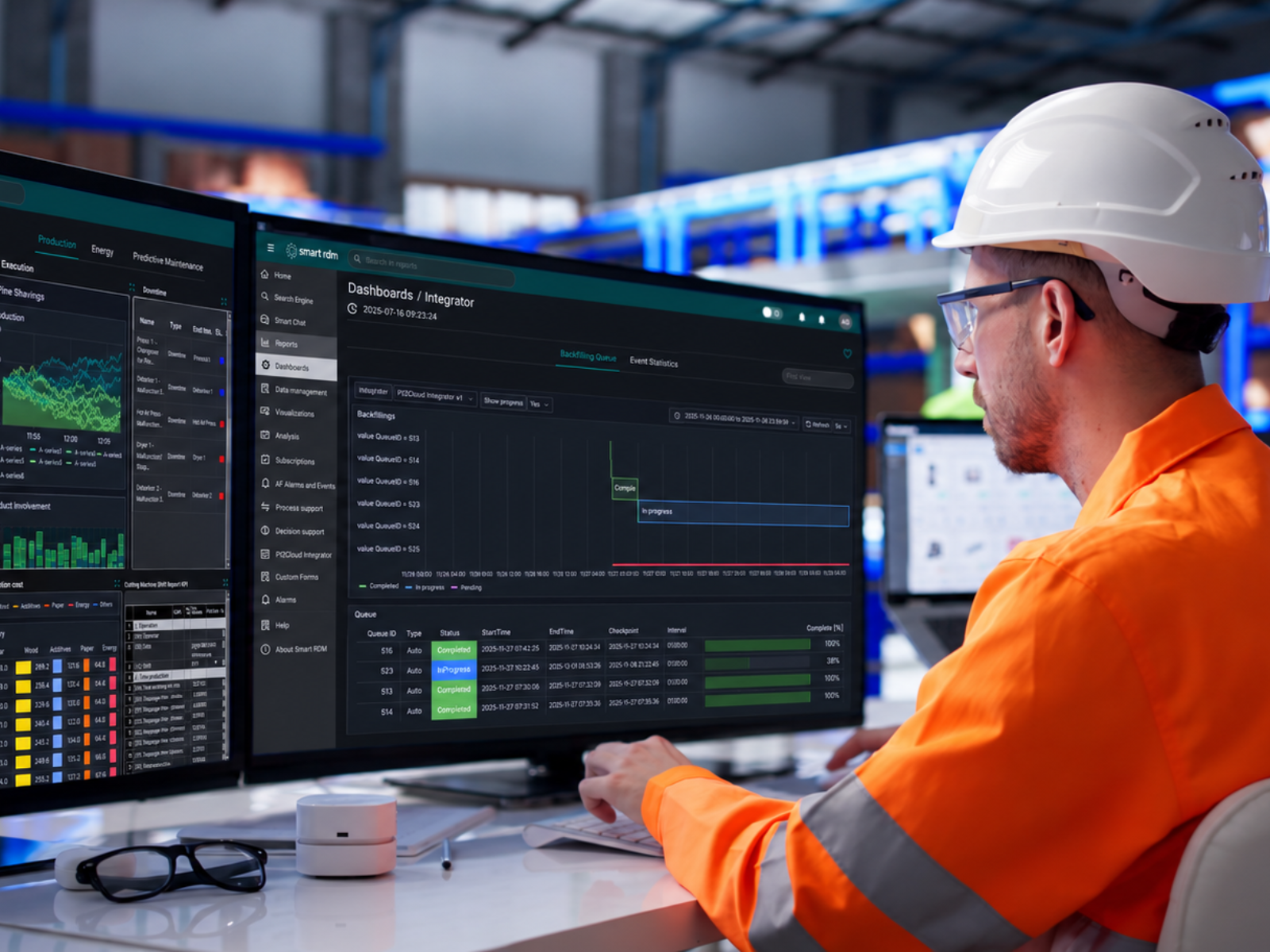
Smart RDM should not be described as a complete operational excellence program. It can, however, support OpEx as a data and analytics layer: it integrates operational, production, quality, energy and maintenance data, so the organization can see deviations sooner, measure KPIs and support improvement decisions.
The most common mistakes when implementing operational excellence
The most common mistake is treating OpEx as a set of tools rather than as a management system.
Typical problems:
- no link to business goals;
- too many initiatives with no priorities;
- focus on workshops instead of changing the way work is done;
- lack of leadership commitment;
- no gemba presence and no contact with the real process;
- copying tools without understanding the problem;
- KPIs with no owners;
- dashboards with no decisions or actions;
- no standardization after an improvement;
- no involvement of operators;
- lack of psychological safety;
- local optimizations that worsen the result of the whole system;
- no maturity reviews;
- confusing continuous improvement with the whole of OpEx;
- treating technology as a substitute for culture and process.
Good OpEx should be visible in the everyday rhythm of the organization: in huddles, in how problems are handled, in work standards, in management decisions, in KPIs, in gemba walks and in the genuine engagement of people.
FAQ
What is operational excellence?
Operational excellence is a management system for the organization, directed at delivering value to the customer over the long term through the development of people, stable processes, continuous improvement, data and alignment with business strategy.
In manufacturing it means joining the shop floor, quality, safety, maintenance, logistics and performance management into one coherent operating system.
What does operational excellence mean in manufacturing?
Operational excellence in manufacturing is a plant’s ability to deliver products to customer requirements in a stable, safe and predictable way, at controlled cost and with continuous process improvement.
It applies to production, maintenance, quality, planning, the supply chain, energy, work standards and operational data.
How does operational excellence differ from continuous improvement?
Continuous improvement is one of the pillars of operational excellence.
OpEx is the broader organizational program, spanning strategy, culture, processes, KPIs, leadership and technology. CI focuses on systematically improving processes and solving problems.
How does operational excellence differ from operational efficiency?
Operational efficiency means achieving a better result with lower resource consumption.
Operational excellence is broader. It includes efficiency, but also quality, safety, culture, employee engagement, work standards, the capacity to learn and the alignment of activity with strategic goals.
How does operational excellence differ from process optimization?
Process optimization concerns the improvement of a specific process – for example shortening cycle time, reducing scrap or raising throughput.
Operational excellence includes process optimization as one element, but adds culture, leadership, KPIs, strategy, people development and a management system.
What are the 4 pillars of operational excellence?
Four pillars are frequently cited: culture and leadership, process excellence, continuous improvement and performance management.
In practice it is worth adding a fifth: strategic alignment. Without it, OpEx activities may be locally sound without supporting the organization’s most important goals.
What are the core elements of operational excellence?
The five core elements of OpEx can be described as culture and leadership, processes, continuous improvement, performance management and strategic alignment.
Similar areas appear in models such as the Shingo Model, where the emphasis falls on principles, behaviors and enterprise results.
What are the three components of operational excellence?
In simple terms, the three components of operational excellence are people, processes and technology.
People create the culture and solve problems. Processes provide stability and repeatability. Technology provides data, visibility and decision support. In a mature program all three have to work together.
What are the principles of operational excellence?
The principles of OpEx include respect for every individual, leading with humility, seeking perfection, scientific thinking, focus on process, quality at the source, flow and pull, systemic thinking, constancy of purpose and creating value for the customer.
These principles are especially visible in the Shingo Model.
What is the Shingo Model?
The Shingo Model is an operational excellence framework developed by the Shingo Institute at Utah State University.
It is built on guiding principles that connect culture, continuous improvement, enterprise alignment and results. It stresses that sustainable outcomes come from principle-based behavior, not merely from the use of Lean tools.
What is the Toyota Production System?
The Toyota Production System is a production management system that became one of the origins of lean manufacturing.
Its main pillars are Just-in-Time and Jidoka. Its foundations include standard work, heijunka and Kaizen.
What is Lean Six Sigma in OpEx?
Lean Six Sigma is a methodology that combines Lean, the elimination of waste, with Six Sigma, the reduction of variability and defects.
Within an OpEx program, Lean Six Sigma helps run improvement projects, analyze data, solve problems and improve process quality.
How do you achieve operational excellence?
To achieve operational excellence, an organization should assess its current state, define strategic goals, engage its leaders, stabilize processes, introduce standard work, launch continuous improvement, build a KPI system and scale proven practices.
What matters most is that OpEx becomes an everyday management system rather than a one-off initiative.
How do you build an operational excellence program?
An OpEx program is best started with a maturity diagnosis, a process map, a choice of priorities and clearly defined business goals.
The next steps are to build a roadmap, assign owners, establish the management rhythm, train leaders and teams, run pilot projects, measure results and standardize what works.
How do you demonstrate operational excellence?
Operational excellence can be demonstrated through results and behaviors: stable KPIs, fewer quality problems, shorter lead times, better safety, higher on-time delivery, employee engagement, visible work standards and effective problem solving.
Mature OpEx is also visible in the daily management rhythm: huddles, performance boards, gemba walks and the response to deviations.
Which KPIs measure operational excellence?
OpEx KPIs include OEE, DPMO, lead time, cycle time, cost per unit, first pass yield, right first time, TRIR, LTIR, NPS, CSAT, on-time delivery, employee engagement, throughput, capacity utilization, inventory turns and an OpEx maturity index.
A good KPI set should balance cost, quality, time, safety, the customer and people.
What is an operational excellence dashboard?
An operational excellence dashboard is a view of KPIs and deviations that supports performance reviews and operational decisions.
It can present OEE, quality, safety, cost, lead time, the status of improvement actions, open problems and trends. A dashboard alone is not enough – it has to be tied to accountability and to the management rhythm.
What role does technology play in operational excellence?
Technology supports OpEx through data, visibility, analytics and a faster response to deviations.
Data platforms, dashboards, analytics, simulation, work instruction systems and monitoring tools can strengthen an OpEx program, but they do not replace culture, leaders, standards and the decision-making process.
Does OpEx apply only to manufacturing?
No. Operational excellence can apply to manufacturing, services, logistics, sales, finance, healthcare, administration and software development.
This article, however, concentrates on the industrial and manufacturing context, where OpEx connects processes, assets, quality, safety, energy, data and the work of operational teams.
Is Smart RDM an operational excellence system?
Smart RDM should not be described as a complete operational excellence program.
It can, however, support OpEx as an industrial data and operational analytics platform: it organizes data from processes, production, quality, energy and maintenance, and then makes it available for KPIs, dashboards, deviation analysis and operational decisions.
Sources Shingo Institute – the Shingo Model and the principles of operational excellence.
- Material on the Toyota Production System, lean manufacturing and Kaizen.
- ASQ material on Lean, Six Sigma, TQM and continuous improvement.
- Industry material on hoshin kanri, the X-matrix and strategy cascading.
- Material on TPM, OEE, quality management and operational KPIs.
- Material on operational excellence in manufacturing, the supply chain and industrial organizations.
- Internal Smart RDM material on industrial data, analytics, KPIs, process monitoring and operational decision support.
Light mode