

Data validation: methods, types and best practices

Piotr Szeląg
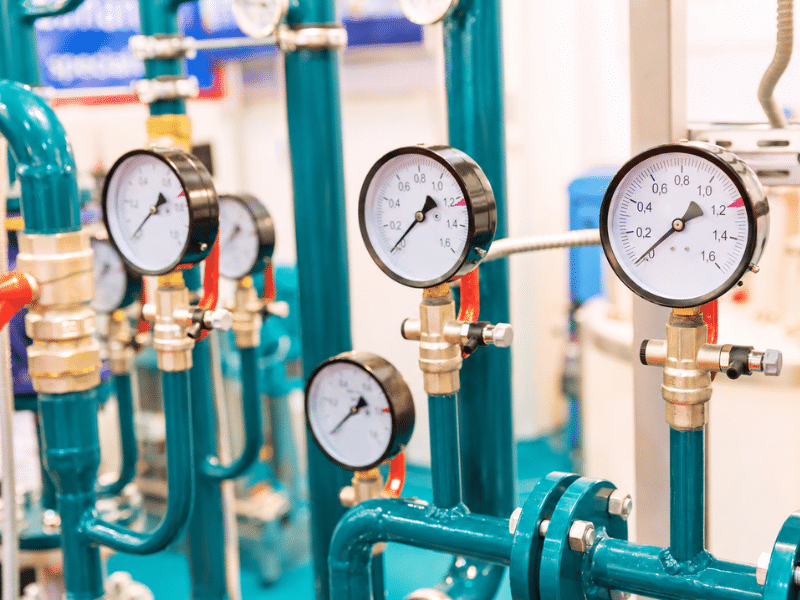
Data validation is the process of checking whether data is correct, complete, consistent and compliant with the rules defined for a given use case. In an industrial environment, this covers sensor data, SCADA and MES systems, historians and operational reports, among others.
Without validation, data may look technically correct and still lead to faulty reports, false alarms, poor decisions or unreliable analytics. Validation should therefore be treated as a permanent element of data management, not a one-off test performed just before a report is published.
What is data validation?
Data validation is the process of checking whether data meets defined requirements for type, range, format, completeness, consistency and fitness for use.
In practice, this means data is compared against agreed rules before it is stored, passed to the next system, or used in a report, an analytical model or a decision-making process. IBM defines data validation as confirming that data is accurate and ready to be used.
A simple example: the “order end date” field cannot be earlier than the “order start date”. An industrial example: a temperature signal from a sensor should not exceed the physically possible range, and a flow value should be consistent with pump operation and system pressure.
Data validation helps answer the following questions:
- Does the value have the correct data type?
- Is it within the permitted range?
- Does the format match the expected pattern?
- Are all required fields populated?
- Is the record a duplicate?
- Is data from different fields or systems mutually consistent?
- Can the data be safely used in a report, an analysis or a decision?
Validation matters especially in industry, because much of the data is generated automatically and at high frequency. A unit error, a time offset, a frozen signal, a missing quality status or a gap in a time series can all affect production calculations, analytics, alarming and operational decisions.
Validated data is one of the foundations of an industrial data platform, because only once quality and context have been checked can it be used successfully in the higher layers of the system.
Data validation vs. data verification
Validation checks whether data complies with defined rules; verification checks whether data matches its source or reality.
The two terms are often confused, but they describe different activities. Precisely draws a similar distinction: validation typically occurs when a record is created or updated, whereas verification may form part of a recurring data quality process.
| Aspect | Data validation | Data verification |
| Core question | Does the data comply with the rules? | Does the data match the source or the actual state? |
| Typical moment | At entry, integration, import or processing | After migration, import or transfer, or during accuracy checks |
| Example | Temperature must be a number between -40 and 150°C | The temperature reading in the system matches the source device |
| Typical data validation techniques | Type, range, format, consistency, completeness, uniqueness | Source-to-target comparison, double entry, checksum, hash |
| Purpose | Reject, flag or correct data that breaches the rules | Confirm that data has not been distorted or transferred incorrectly |
| Scope | Fitness of the data for its intended use | Conformity of the data with a reference, document, source or another system |
An example from a data migration: validation checks that every record has the required fields, a correct date format and a permitted status code. Verification checks that record counts, checksums and values after migration match the source system.
In practice the two processes should complement each other. Validation does not guarantee that data is true. Verification does not guarantee that data will be usable downstream if it fails to meet quality rules.
Data validation vs. data quality
Data validation is a technique that supports data quality, but it does not replace full data quality management.
Data quality covers a broader set of practices: setting standards, profiling data, managing rules, monitoring issues, cleansing data, assigning ownership and driving continuous improvement. IBM identifies six core dimensions of data quality: accuracy, completeness, consistency, timeliness, validity and uniqueness.
| Data quality dimension | Meaning | How validation supports it |
| Accuracy | Data reflects the actual state | Comparison against a range, a source or a reference value |
| Completeness | Required data is present | Mandatory-field and data-gap checks |
| Consistency | Data does not conflict across fields or systems | Cross-field rules, cross-reference checks and cross-system comparisons |
| Timeliness | Data is available when it is needed | Latency, timestamp and data-freshness checks |
| Validity | Data conforms to the permitted format or domain | Type, format, range and reference-list rules |
| Uniqueness | A record does not appear more than once without reason | Duplicate and unique-key checks |
Data validation is therefore one of the mechanisms that maintain data quality. Data cleansing is the next step: correcting, completing, merging or removing faulty records. Validation identifies the problem; cleansing removes or corrects it.
Good data quality translates directly into the quality of decisions. In the context of Decision Intelligence, this means a decision system should know not only the value of a data point, but also its status, reliability, source and limitations.
Types of data validation
Types of data validation define the conditions a single value, a record or a data set must meet in order to be considered correct.
| Validation type | Description | Example | When to use it |
| Data type check | Checks whether a value has the expected type: number, text, date or boolean | The “energy consumption” field must be a floating-point number | Forms, imports, APIs and data from source systems |
| Range check | Checks whether a value falls within permitted limits | Process temperature must be between 60 and 95°C | Measurements, process parameters and quality thresholds |
| Format check | Checks whether a value matches a pattern | A batch number must follow the format PL-YYYY-NNNN | Codes, identifiers, batch numbers, dates and addresses |
| Consistency check | Checks dependencies between fields | The end date cannot be earlier than the start date | Process records, work orders, batches and events |
| Uniqueness check | Checks whether a record or identifier is duplicated | A production order number must be unique | Primary keys, imports, migrations and integrations |
| Completeness check | Checks whether required fields are empty | A failure record must have a date, an asset, a category and a status | Reporting, audit, quality and ESG data |
| Length check | Checks the length of a text string or code | A material code must be 10 characters long | Codes, identifiers and text fields |
| Lookup check | Checks whether a value exists in a reference table | A cost centre code must exist in the organisational reference list | Master data, reference lists, statuses and classifications |
| Pattern check | Checks a value against a regular expression or an agreed pattern | An equipment code must match the location and asset-type pattern | Integrating data from multiple systems |
| Cross-check | Compares data across sources or tables | Output reported in MES should match the line counter | OT/IT integration, migration and reporting |
The most common questions concern the “four types” or “five types” of validation. In practice, classifications differ between sources, but the basic set usually covers type, range, format, consistency and completeness checks. Industrial environments add checks on time signals, quality statuses, engineering units and relationships between sensors.
Data validation methods
Validation methods can be organised by the level at which the check operates: a single field, a whole record, a data set, a schema, or a comparison between systems.
| Validation level | Scope | Typical moment | Example |
| Field-level validation | A single field or value | At data entry, integration or sensor read | Temperature must be a number and fall within the process range |
| Record-level validation | Several fields within one record | After a record or event is created | A work order cannot have an end date earlier than its start date |
| Batch-level validation | A whole data set or import package | During ETL, migration, import or periodic reporting | Record counts and checksums must match the source system |
| Schema validation | Data structure, types and constraints | For APIs, files, databases and pipelines | A JSON file must conform to the approved schema |
| Cross-system validation | Data held in multiple systems | After integration or replication | An order in MES must correspond to the order in ERP |
| Statistical validation | Patterns, deviations and distributions | For process data or large data sets | A value several standard deviations from the usual profile must be flagged |
Field-level validation
Field-level validation checks a single value. It is often applied in real time — at data entry, on file import, when an API message is received, or when a source system is read.
Examples:
- a quantity field must be an integer;
- a flow value cannot be negative;
- a date must follow the agreed format;
- a status code must belong to the permitted reference list.
This level of validation is simple but highly effective. It stops many errors before they reach the next system.
Record-level validation
Record-level validation checks the relationships between fields within a single record.
Examples:
- the end date must be later than the start date;
- a “closed” status requires a closing date;
- the number of good units cannot exceed the total number of units;
- a batch with a “released” status must have a quality control result.
In a production environment this level matters particularly for work orders, shift reports, quality events, downtime records, operator forms and maintenance logs.
Batch validation
Batch validation covers an entire file, import, migration or data package processed in a pipeline.
Examples:
- the record count after import must match the record count in the source file;
- the sum of production by shift must equal the daily total;
- the file must not contain duplicate keys;
- the date range in the data package must match the reporting period.
This type of validation is typical of ETL (Extract, Transform, Load) processes and of periodic loads into data warehouses, reports, analytical models and central systems.
Schema validation
Schema validation checks whether data has the expected structure.
It can apply to a database table, a CSV file, a JSON message, an XML document or an API structure. The check covers field names, data types, required columns, constraints, relationships and sometimes permitted values.
Schema validation is important in system integration, because many errors stem not from the value itself but from a change in the data structure — a renamed column, a reordered set of fields in a file, or a new status added without updating the receiving system.
Data validation in industrial environments
Validating industrial data covers signals from sensors, controllers, SCADA and MES systems, historians and operational forms, where errors typically stem from problems with the signal, timing, units, quality statuses and process context.
In industry it is not enough to check that a field contains a number. You need to know whether that number is physically plausible, whether it comes from a reliable source, whether it is current, whether it carries the right unit, and whether it agrees with the other signals describing the same process.
| Industrial check type | What it detects | Example |
| Sensor range check | A value outside the physical or process range | Boiler temperature outside the range permitted for the current operating mode |
| Spike detection | A sudden, short-lived jump inconsistent with process dynamics | Flow rises by 300% within one second with no change in pump status |
| Frozen signal detection | A signal that has not moved for too long | A temperature sensor reports an identical value for 12 hours |
| Timestamp validation | Gaps, duplicates, wrong sequence or inconsistent time zones | Data from several lines is offset by an hour after a clock change |
| Tag-level validation | An incorrect unit, scale, status or tag description | A pressure signal stored in bar but interpreted as kPa |
| Cross-sensor validation | Inconsistency between related signals | The pump is running, but flow and pressure do not respond as expected |
| Alarm validation | False, repeating or inconsistent alarms | A low-level alarm is raised despite a stable sensor reading |
| Historian completeness check | Missing data, interpolation and compression artefacts | A gap in historical data is wrongly read as a stable process |
| OPC UA quality code check | The quality status of a value: Good, Bad, Uncertain | A value flagged as Uncertain should not feed a predictive model unflagged |
Sensor data validation
Sensor data requires both technical and process validation.
Technical checks confirm that the signal is available, has the correct type, falls within range and carries a current timestamp. Process checks confirm that the signal is consistent with what is known about the installation, its operating mode and the related measurements.
For example, negative flow may be an error in one process but a legitimate state in another where the installation runs in both directions. Validation rules should therefore never be copied across without accounting for equipment context, operating mode and technology.
Sensor data validation is a precondition for reliable predictive maintenance models, because a model built on frozen, offset or incorrectly scaled signals can produce false indications.
Validating historian and time-series data
A data historian stores process data over time, often at high frequency and with compression mechanisms in place. Validating data both before it is written and after it is read helps avoid misreading gaps, interpolation and artefacts.
Checks should cover, among other things:
- continuity of timestamps;
- duplicate samples;
- chronological order;
- time-zone consistency;
- the quality status of each sample;
- the proportion of interpolated data;
- changes in sampling frequency;
- the effect of compression on averages, sums and extremes.
Data should be validated before it is written to the historian and again when it is used in reports or analyses. OPC UA represents the quality of a value through a StatusCode, whose severity can indicate a Good, Bad or Uncertain state.
Validation in OT/IT integration
In OT/IT integration, validation ensures that data keeps its meaning as it moves between control, manufacturing execution, reporting and business systems.
Typical problems include:
- the same asset carrying a different name in SCADA and in MES;
- different units in the source and target systems;
- a time offset between the OT and IT environments;
- a missing quality status on data passed into a report;
- a product code that exists in ERP but not in MES;
- sensor data assigned to the wrong piece of equipment.
Our article on OT/IT integration describes the flow of data between operational and information technology in more detail. From a validation standpoint, the key point is that data must not lose its unit, timestamp, source identifier or quality status along the way.
Validating production and ESG data
Validation also determines the credibility of production indicators such as OEE, good-unit counts, downtime and the quality of shift reports. Detailed production metrics are a separate topic, but their results depend on the correctness of the input data described in our article on OEE.
Energy and environmental data likewise requires checks on completeness, range, units and assignment to the correct period or site. In ESG reporting, errors in meters, time gaps and conversion factors can distort reported emissions, energy consumption and environmental indicators. This area is covered further under ESG Data Management.
The data validation process: how to implement data validation
A data validation process should cover the identification of critical data, the definition of rules, automated execution of checks, exception handling, monitoring and periodic rule review.
The practical flow looks as follows:
Input data → validation rules → pass/fail/warning result → action → monitoring → rule review
1. Identify critical data
Not all data needs the same level of control. Start by identifying the data that affects reports, decisions, compliance, safety, quality, settlements or analytical models.
Examples of critical data:
- production counters;
- scrap and defect data;
- operating and downtime hours;
- energy measurements;
- sensor data feeding predictive models;
- batch and material identifiers;
- quality control results;
- data required for regulatory reporting.
2. Define validation rules
Rules should be unambiguous, testable and linked to a named data owner.
Example rules:
- temperature_value must be a floating-point number;
- pressure_value must fall between 0 and 16 bar;
- end_time must be later than start_time;
- asset_id must exist in the asset reference list;
- quality_status may only take the values Good, Bad or Uncertain;
- the number of good units cannot exceed the total number of units.
Rules can be expressed declaratively — in YAML, JSON or SQL, for example — or programmatically in application code. In larger environments it is worth using a validation rules engine that supports versioning, change history, alerts and exceptions.
3. Decide how errors are handled
Not every breach should lead to data being rejected automatically.
Typical responses include:
- rejecting the record;
- flagging the record;
- routing it to quarantine;
- raising a warning;
- automatic correction under an approved rule;
- escalation to the data owner;
- storing the data with a reduced quality status.
For industrial data it is often more important to retain a value with the appropriate quality status than to delete it. Deleting data creates a gap that may later be misread as the absence of an event.
4. Monitor rule effectiveness
Validation rules should be monitored in the same way as any other element of the data process.
Useful measures include:
- the number of errors per rule;
- the number of errors per data source;
- the share of data rejected, flagged and corrected;
- exception handling time;
- the number of false alarms;
- the impact of errors on reports and processes;
- the most frequently breached rules.
Monitoring makes it possible to tell whether the problem lies with the data source, the integration, the rule configuration or the way users work.
Data validation best practices
Best practice in data validation centres on catching errors as close to the source as possible, automating checks and clearly assigning ownership of the rules.
| Do | Don’t |
| Validate data as close as possible to the point where it is created | Don’t wait until the final report to run checks |
| Define rules together with the process owners | Don’t build rules on purely technical grounds, without business context |
| Document the rules, the exceptions and the owners | Don’t leave validation logic buried in undocumented code |
| Automate repeatable checks | Don’t rely on manual checks for critical validation |
| Version your validation rules | Don’t change thresholds and reference lists without an audit trail |
| Distinguish between an error, a warning and missing data | Don’t treat every breach the same way |
| Preserve the data quality status | Don’t delete problematic data without recording why |
| Monitor the volume of exceptions and false alarms | Don’t assume a rule set once will stay valid forever |
| Test rules against historical data | Don’t roll out new rules without assessing the impact on existing processes |
| Connect validation to data governance | Don’t push the entire responsibility onto the IT team |
The single most important principle: validation should be designed together with the process. Energy metering needs one kind of logic, maintenance data another, quality reports another again, and operator form data something different still.
In industrial organisations, a phased rollout works well: start with critical data, move on to data used frequently in reports, and only then extend to a wider range of sources.
Data validation tools and platforms
Data validation tooling spans database constraints, ETL platforms, data quality systems, data observability tools, iPaaS solutions, custom scripts and industrial data platforms.
| Vendor | Area | Key capability |
| IBM | Data integration and quality | IBM InfoSphere Information Server covers data integration, quality and validation |
| Teradata | Analytics and large data sets | Teradata Vantage supports data validation and quality control in analytical environments |
| TIBCO | Middleware and data quality | TIBCO Data Quality supports profiling, validation and cleansing |
| Precisely | Data integrity | The Precisely Data Integrity Suite covers profiling, validation and quality monitoring |
| Semarchy | Master data management and data quality | Semarchy xDM combines master data management with validation and data quality |
| Flatfile | Data import and onboarding | Flatfile supports validation of data imported from customers and partners |
| SnapLogic | iPaaS and integration pipelines | SnapLogic enables data validation within integration flows |
| Informatica | Enterprise data quality | Informatica Data Quality handles validation rules, profiling and quality monitoring |
| Atlan | Data governance and data catalogue | Atlan links metadata management with quality and governance processes |
| Monte Carlo | Data observability | Monte Carlo monitors data pipelines and detects quality anomalies |
| Smart RDM | Industrial and operational data | Smart RDM can support industrial data validation, exception workflows and operational context |
The right tool depends on where the data originates, how quickly you need to react, the data volume, whether real-time operation is required, who owns the rules, and whether a validation result needs to trigger a workflow.
A Manufacturing Data Platform can centralise validated industrial data, while Manufacturing Analytics puts that data to work in analyses, reports and models. Validation does not replace analytics, but it determines whether the results of that analytics can be trusted.
FAQ
What is data validation?
Data validation is the process of checking whether data complies with agreed rules on type, range, format, completeness, consistency and fitness for use.
In practice, it means checking data before it is stored, processed, analysed or used to support a decision.
What are the four types of data validation?
The four types most commonly cited are:
- data type check;
- range check;
- format check;
- consistency check.
In practice, organisations also apply completeness, uniqueness, length, lookup, pattern and cross-system checks.
What are the five types of validation check?
Five common validation checks are:
- data type check;
- range check;
- format check;
- length check;
- lookup or reference check.
In industrial environments it is worth extending this set with checks on timestamps, quality statuses, engineering units, data gaps and consistency between sensors.
What is an example of data validation?
A simple example: a system checks whether an email address follows a valid format.
An industrial example: a system checks that a pressure reading falls within the permitted range, carries a current timestamp and a correct quality status, and is consistent with pump operation and flow in the installation.
Is data validation hard to learn?
The basic rules are easy to learn, because they concern data type, format, range and completeness.
The difficulty grows in industrial environments, where rules must account for process context, equipment operating mode, units, latency, signal dynamics, historical data and dependencies between systems.
How does data validation differ from data verification?
Validation checks whether data complies with agreed rules. Verification checks whether data matches its source or the actual state.
For example, validation confirms that a “temperature” field holds a number within the permitted range. Verification confirms that this value agrees with the source device or another reference system.
How does data validation differ from data quality?
Data validation is a data control technique. Data quality is a broader discipline covering standards, governance, profiling, cleansing, accountability, monitoring and improvement.
Validation helps maintain data quality, but on its own it does not resolve every issue around ownership, definitions, lineage and use.
What are the most important data validation rules?
The most important rules cover data type, range, format, length, completeness, uniqueness, reference values, relationships between fields and consistency across systems.
Industry adds rules for quality statuses, units, timestamps, data gaps, frozen signals, value spikes and consistency between related measurements.
How does data validation work in manufacturing?
In manufacturing, validation checks data from systems such as SCADA, MES, historians, sensors, operator forms and quality systems.
Examples include detecting out-of-range values, frozen signals, gaps in time-series data, incorrect units, duplicate orders, inconsistent production counters and invalid quality statuses.
How do you implement data validation?
Start by identifying critical data, then define the rules, decide how errors are handled, deploy automated checks, monitor exceptions and review the rules periodically.
A good approach is to begin with data that affects reports, decisions, compliance, quality, production and analytical models.
Sources and further reading
- IBM — materials on data validation, data quality dimensions and data integrity testing.
- Precisely — materials on the difference between data validation and data verification.
- OPC Foundation — the OPC UA specification covering StatusCode and data value quality.
- DAMA / DAMA UK — materials on the dimensions of data quality.
- GOV.UK — Government Data Quality Framework.
- Teradata — materials on data validation, processes and tools.
- Semarchy — materials on validation techniques and data quality.
- Flatfile — materials on data validation in import and onboarding.
- SnapLogic — materials on data validation in integration pipelines.


Light mode